


PART 1: THE MENTAL HEALTH CRISIS IN FREELANCING
Does Freelancing Cause Depression?
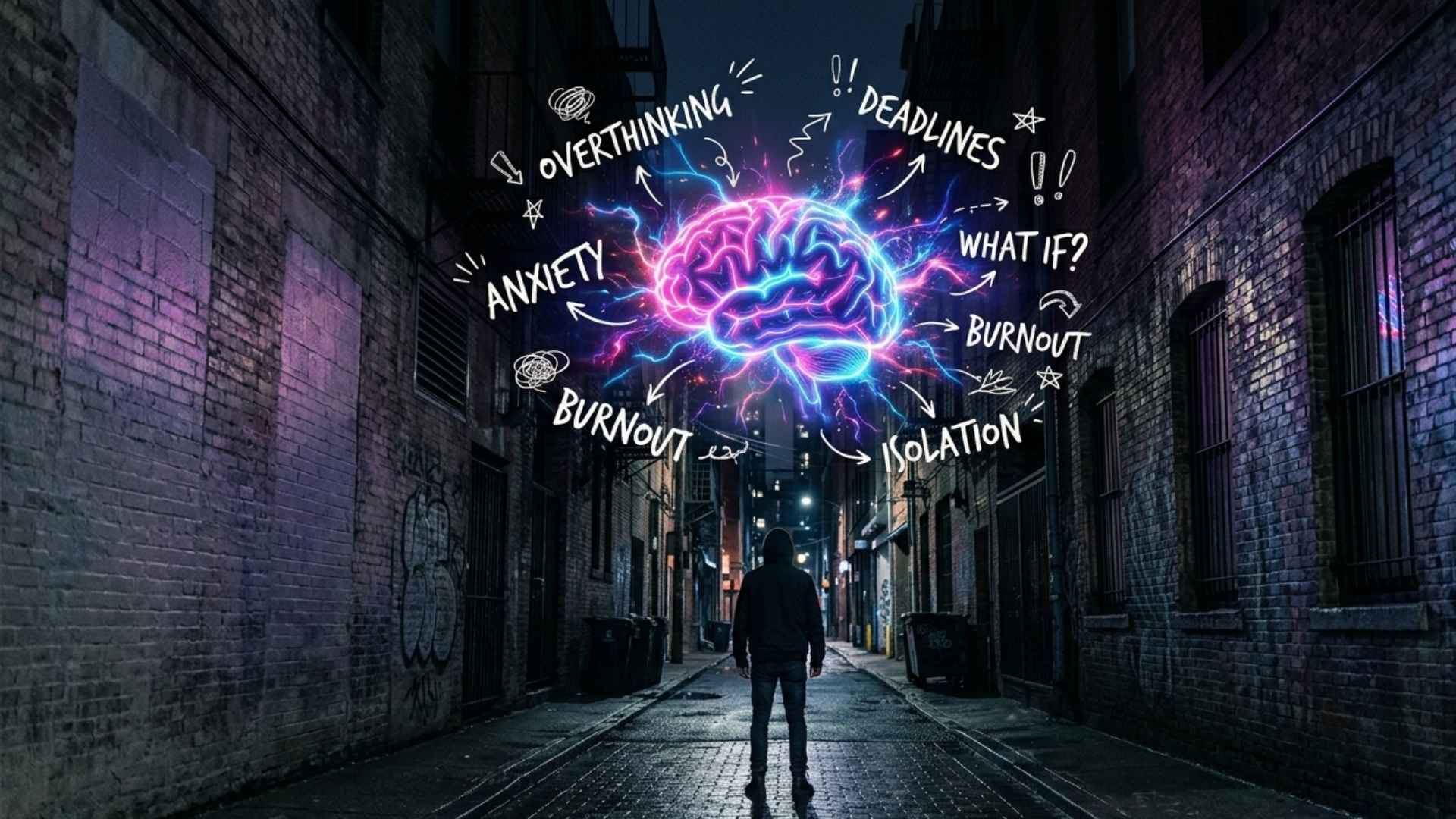
Yes. And the research backs it.
According to a study published in the Journal of Occupational Health Psychology, freelancers and remote workers report significantly higher rates of anxiety, loneliness, and burnout compared to traditional office employees.
A 2023 report by Freelancers Union found that 77% of freelancers reported experiencing work-related stress that affected their personal life, and nearly 40% showed signs of clinical anxiety or depression at some point in their freelance career.
Why does this happen?
Because freelancing sells you a dream — freedom, flexibility, income on your terms. But what it doesn’t warn you about is the psychological cost of that freedom.
The 7 Real Reasons Freelancing Destroys Mental Health

1. Income Uncertainty = Constant Cortisol
Your brain is wired for survival. When income is unpredictable, your body literally treats it like a physical threat. Every month that starts without confirmed projects is your nervous system on high alert. This chronic low-grade stress — called financial anxiety — is one of the leading causes of freelancer depression.
2. Isolation is Real and It’s Dangerous
Humans are social creatures. Office environments, even when annoying, provide micro-doses of human connection — a coffee chat, a lunch break, casual hallway conversations. Freelancers lose all of this. Over time, this isolation compounds into loneliness, which Harvard Medical School research has linked directly to increased risk of depression and even early mortality.
3. The Blurred Line Between Work and Life
When your bedroom is your office, your brain never fully switches off. You check emails at midnight. You feel guilty resting. You work weekends “just to catch up.” This constant state of half-working, half-resting means you get neither proper productivity nor proper recovery — a textbook recipe for burnout.
4. Imposter Syndrome Hits Differently
In a job, your paycheck validates your worth monthly. In freelancing, every single client interaction is a mini job interview. Every proposal rejection feels personal. Over time, the repeated self-questioning — Am I good enough? Why did they choose someone else? Should I lower my rates? — erodes self-confidence in ways that are hard to recover from without awareness.
5. Overthinking Becomes Your Default Mode
No manager to guide you. No clear roadmap. Every decision — pricing, clients, skills, marketing — falls on you. This decision fatigue, combined with no external validation, leads to chronic overthinking. You spend more energy worrying about the work than actually doing the work.
6. No Sick Days. No Safety Net.
If a traditional employee gets sick, they take a day off. A freelancer who takes a sick day loses income AND falls behind on deadlines. This creates a dangerous dynamic where you push through illness, burnout, and mental exhaustion — until your body or mind forces a complete breakdown.
7. The Comparison Trap on Social Media
LinkedIn and Instagram show you other freelancers posting their “wins” — big clients, exotic work locations, six-figure months. Nobody posts the dry months, the rejected proposals, the 2am anxiety spirals. This constant comparison to a highlight reel creates a distorted reality that makes your own journey feel inadequate.
⚖️HONEST PROS & CONS OF FREELANCING
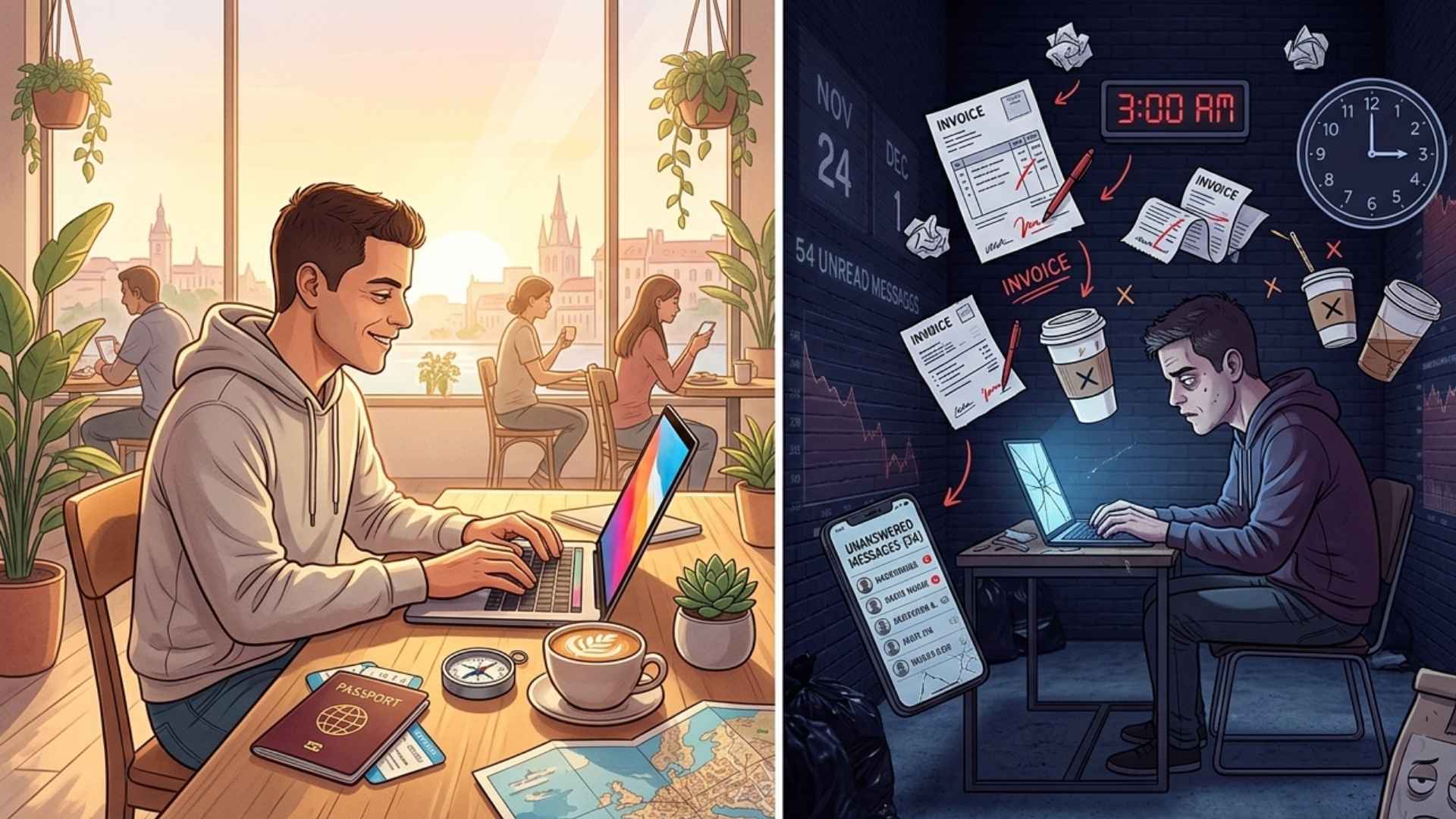
✅ THE REAL PROS
Freedom of Time You decide when you work. Night owl? Work at 2am. Early bird? Start at 5am. This flexibility is genuinely life-changing for people with family responsibilities, health conditions, or non-traditional schedules.
Unlimited Income Ceiling A salaried job caps your income. Freelancing doesn’t. A skilled developer, designer, or writer can scale from $500/month to $10,000/month by improving positioning, not just skills.
Geographic Independence Work from Rawalpindi, Bali, or Barcelona. Your laptop is your office. This opens up a quality of life that a 9-5 simply cannot offer.
Skill Acceleration Because you work across multiple clients and industries, your learning curve is dramatically steeper than someone doing the same tasks in one company for years.
You Choose Your Clients Bad boss? Toxic environment? In freelancing, you fire clients. This sense of control over who you work with is psychologically powerful.
Portfolio Ownership Every project you complete belongs to your portfolio. You build a body of work that compounds in value over time.
❌ THE REAL CONS
No Guaranteed Income Some months are $3,000. Some are $300. If you cannot psychologically handle income volatility, freelancing will break you.
No Benefits or Security No health insurance, no pension, no paid leave, no job security. You are entirely responsible for your own financial safety net.
You Are the Entire Business Marketer. Accountant. Customer service. Project manager. HR department. All of that is you. The administrative burden is invisible but absolutely exhausting.
Client Dependency Is Dangerous If 80% of your income comes from one client and they leave, your entire financial life collapses overnight. Diversification is critical but takes time to build.
Feast or Famine Cycles Most freelancers experience periods of being overwhelmed with work followed by complete droughts. Managing these cycles without emotional damage requires serious mental discipline.
Loneliness and Isolation Already covered above — but worth repeating as a standalone con because it is genuinely one of the most underestimated challenges of long-term freelancing.
🚫 PART 3: WHY FREELANCING IS NOT FOR EVERYONE
You should NOT freelance if:
You need emotional stability from external structure. Some people genuinely thrive with clear schedules, managers, team environments, and defined roles. There is no shame in this — it is simply self-awareness.
You struggle with self-motivation. Without accountability, most people default to procrastination. Freelancing requires an almost inhuman level of self-direction.
You are in an active mental health crisis. Starting freelancing during depression or severe anxiety is like learning to swim in the deep end. Stabilize first.
You have zero financial runway. Beginning freelancing with no savings and immediate financial pressure is one of the most common reasons people fail and spiral into deeper financial and mental stress.
You take rejection personally. Proposals will be rejected. Clients will ghost you. Projects will fall through. If each rejection destabilizes you emotionally, the freelance environment will be relentlessly brutal.
💡 PART 4: SOLUTIONS & HOW TO PROTECT YOUR MENTAL HEALTH
If You Choose to Freelance Anyway
Build a Financial Buffer First Before going full-time freelance, save at least 3-6 months of living expenses. This single step removes 60% of the psychological pressure that destroys new freelancers.
Create Fake Office Hours Set working hours and respect them. 9am to 5pm or whatever works for you — but when those hours end, close the laptop. Your brain needs the boundary even if your schedule doesn’t require it.
Get Out of the House Daily Even a 20-minute walk breaks the isolation loop. Coffee shops, co-working spaces, libraries — physical change of environment has a measurable impact on mental clarity and mood.
Never Rely on One Client Always be marketing, even when fully booked. The moment you stop, you are 90 days away from a financial crisis.
Talk to Someone Therapist, mentor, freelance community — isolation is the enemy. Communities like Reddit’s r/freelance, LinkedIn groups, or local entrepreneurship networks provide the social layer that remote work removes.
Track Progress, Not Just Income Keep a weekly log of wins — skills learned, proposals sent, clients helped, positive feedback received. On hard months, this becomes your evidence against your own imposter syndrome.
Invest in Soft Skills as Seriously as Technical Skills Communication, negotiation, emotional intelligence, time management — these are not “soft.” They are the difference between a freelancer who survives and one who thrives.
🛠️ PART 5: SKILLS THAT ACTUALLY BUILD YOUR FUTURE
Hard Skills Worth Developing
| Skill | Why It Matters | Income Potential |
|---|---|---|
| Copywriting | Every business needs words that sell | $50-200/hour |
| Web Development | Evergreen demand, scalable income | $75-250/hour |
| Video Editing | Exploding demand with content economy | $40-150/hour |
| UI/UX Design | High value, low supply of real talent | $60-200/hour |
| Digital Marketing | Every brand needs online presence | $45-150/hour |
| Data Analysis | AI age makes data skills gold | $80-300/hour |
Soft Skills That Separate Good From Great
Time Management — Without it, freelancing becomes chaos. Use time-blocking, not to-do lists. Schedule your work like appointments.
Communication — Clear, professional, prompt communication builds reputation faster than any skill. Most clients leave freelancers not because of bad work but because of bad communication.
Emotional Regulation — The ability to handle rejection, uncertainty, and pressure without spiraling is arguably the most valuable freelance skill nobody teaches.
Boundary Setting — Learning to say no to bad clients, low rates, and scope creep protects both your income and your mental health.
🏠 PART 6: WORK FROM HOME — WHAT YOU ACTUALLY NEED
Physical Requirements
- Dedicated workspace separate from sleeping/relaxing area
- Reliable high-speed internet with a backup option
- Ergonomic chair and proper desk setup — back pain is a real productivity killer
- Good lighting — natural light preferred, proper lamp as backup
- Noise-cancelling headphones for focus and client calls
Digital Requirements
- Project management tool — Notion, Trello, or Asana
- Communication — Slack, Zoom, or Google Meet
- Time tracking — Toggl or Clockify
- Invoicing — Wave (free) or FreshBooks
- Portfolio — personal website or Behance/LinkedIn
Mental Requirements
- Morning routine that signals “work mode” to your brain
- Hard stop time that signals “rest mode”
- Weekly review to assess progress and recalibrate
- Monthly “CEO day” to work on your business, not just in it